Some time back we hosted at our Old Town store a book signing with New York Times Food Columnist, Melissa Clark, who had been making rounds to promote her then-new cookbook, “Cook This Now: 120 Easy and Delectable Dishes You Can’t Wait to Make.” We entertained a small crowd as attendees had the opportunity to meet the author, get her autograph, and pick her brain as she fielded questions about cooking and beyond. The book’s release, and subsequently the event, landed in mid-Fall, so it was no surprise that many of the questions and much of the advice she doled out, centered on, among other seasonal topics, brining, stuffing, or otherwise preparing turkey. Melissa Clark, I realized then, is uniquely talented. Besides being a good cook, she has a way of making some perennially nightmarish kitchen projects sound and look surprisingly manageable. Case in point: I’d been trying for a good while with limited success to concoct my own flavor-infused mayonnaise when I stumbled upon some classic Melissa Clark wisdom in the form of a recent column, “Mayonnaise: Oil, Egg, and a Drop of Magic.”
Brewing with Spices
The art of brewing may be the oldest craft invented by humanity. In fact, many anthropologists believe that brewing predates agriculture, and may have been the original impetus for the development of permanent agrarian settlements.
Today, the standard formula for beer is malt, water, yeast and hops. In fact, the reinheitsgebot purity law of Germany forbids the use of any other ingredients in beer. However, this has not always been the case. Historically, brewers have utilized a variety of spices to enhance the flavor of their beers. Long before the use of hops became widespread, a blend of spices known as gruit was the primary means of flavoring beer. Often, the spices in gruit also acted as a preservative to protect the beer’s flavor. There are many versions of gruit, each using a variety of spices. Many include esoteric herbs such as sweet gale and mugwort, as well as some more familiar spices, such as juniper berries, ginger, caraway seed, anise seed, nutmeg, and cinnamon. Although the use of gruit largely fell out of favor when hops became the norm, many craft and home brewers, as well as some historic breweries, still use gruit to create unusual and flavorful beers. Continue reading
Homemade Lavender Simple Syrup
In the past couple of years, I have gotten the chance to work with some really wonderful spices. It’s always fun to rediscover old favorites in new and interesting ways, and play with delightful new spices. A few months ago we got in a spice that really wowed me: Ultra Blue Lavender. This gorgeous, deep violet lavender had incredibly strong color and fragrance, that made our normally wonderful lavender pale in comparison. Continue reading
Seasoning Snafus: Hot or Spicy?
Some like it hot, while some might like it spicy, some could even go so far as enjoying it hot and spicy… But what’s the difference between hot and spicy? As spice merchants, we regularly hear and sympathize with the confusion between the words “hot” and “spicy”. A lot of folks will hear the word “spicy” and immediately believe that a seasoning will be “hot”, which is a reasonable but not always correct assumption to make. In this edition of Seasoning Snafus, I’ll try to clear up some of the semantic confusion between these two words and show the best ways to spice up or heat up a meal. Continue reading
It’s in the Genes: the Biology of Food Preference
There might be a reason you love a good curry and can’t stomach spinach. A group of European scientists have begun work on a project that could eventually explain everything from your insatiable sweet tooth to your superhuman tolerance for spicy foods. New research on the “genetics of food preferences” suggests our tastes and distastes for certain foods may have their origins in our evolutionary histories, and that our genetic makeup may actually dictate which foods we find attractive, and which ones we abhor. The project – officially called Marco Polo (after the explorer who famously travelled the trade route centuries ago) – examines DNA from a number of cultures and communities along Eurasia’s historic Silk Road in an effort to determine how genetic variation translates to palatal differences within and across cultures. And while Marco Polo’s orchestrators still have significant work to do before the project sees its conclusion, early research has already turned up some interesting results which could, given time, lead to advancements in food science and changes in the direction of food industry research.
The Joys of Blending
One of the benefits of working at The Spice House is the opportunity to have new and unique sensory experiences on a regular basis. Just how our senses are stimulated depends on the nature of the task we are handling at any given moment, but the truth is there is very little work to be done at our store that won’t open the eyes, clear the sinuses, or intrigue the taste buds. Indeed, there is a lot to take in at our little shop, from exotic sights and scents to vibrant flavors and even sounds (our founder, the late Bill Penzey Sr., often proclaimed there was music in the spices themselves, although it might go undetected by the untrained or inattentive ear). Of all the work at The Spice House, however, there may not be a job that so deeply buries the hand in sensory stimuli as blending spices.
Blue Hill at Stone Barns Gardens Tour and Lunch
I was at a culinary conference in New York earlier this year, where I booked an optional tour to Blue Hill. Chef Dan Barber was to lead the tour; following the tour, he was to engage in a discussion panel led by former food columnist for the New York Times, Molly O’Neill, while we enjoyed a wonderful luncheon. This was a very expensive optional tour, which I attempted to justify to my husband by showing him that Food and Wine Magazine had honored this restaurant by including them in their list of the “world’s top ten life changing restaurants.”
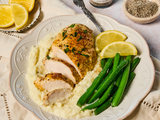
Parchment Baked Salmon with Ayurvedic Spices
The pungent mixture of curative spices, served as delectable fine dining.
Throughout history, many herbalists, doctors, and chefs have touted the health benefits of spices in the kitchen. Nearly every individual spice and herb we carry has at some point been used as a holistic remedy. Cultures the world over have long turned to the healing properties of spices to ease pains, fight deseases, and slow aging. Even now, every few months we hear about a new study proving the long known health benefits of a particular spice. Here, at the Spice House, we are far from doctors or herbalist healers, we are but humble spice merchants. It is from this perspective that I’ve noticed that there is one thing that isn’t always mentioned in these modern medical studies of spices or holistic herbalist books. Cooking with spices isn’t just healthy, it is also delicious. Continue reading
You can definitely pickle that
Pickles. Without a doubt my favorite food group. This briny treat is an excellent accent to sandwiches, salads, bloody mary’s and (in my house) midnight snacking. The perfect pickle balances sourness, sweetness and spice in a way that makes them a truly addictive snack sensation. Typically I get my pickle fix from fine vendors across Chicago. But this fall I decided to try my hand at homemade refrigerator pickles.
Congratulations, Dimitri and Naomi!
We at the Spice House would like to extend our sincerest congratulations to newlyweds Dimitri and Naomi Moore. Dimi and Naomi tied the knot on August 25th at Pilsen’s Living Room Lounge, following a seven-month engagement. It is always special to play a part in a story with a happy ending, and we were honored to learn that the Moores remember our store fondly as the place they began their romantic journey together.